At Bristol Vet Specialists, we offer a chronic pain management service that integrates with the orthopaedic and neurology services when needed. This allows us to provide a multidisciplinary approach to diagnosis and management of chronic pain, and optimise outcomes for our patients.
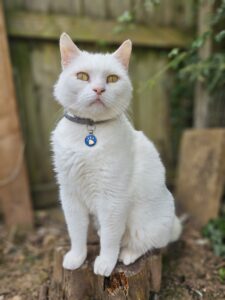
Odysseus
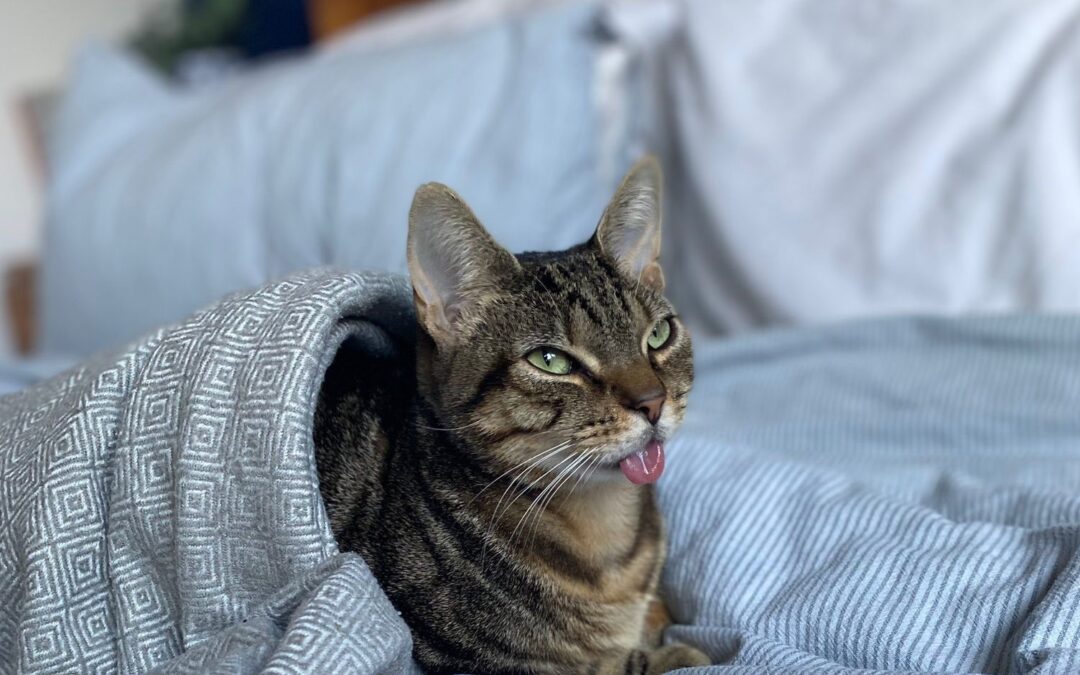
Odysseus is a 7 year 6 month old British Short Hair x Persian cat. He has always had quite challenging behaviour, which is managed at home with Fluoxetine and Gabapentin, but this can make him quite complex to examine in a veterinary environment. At BVS, we are focused on putting the patient experience at the centre of our care. With this in mind, we were very careful to examine him gently with the excellent assistance of his caregiver.
History: In terms of significant history, he had unknown trauma to his right metatarsals at 2 years of age, and this injury was managed conservatively. Approximately two years ago, when Odysseus was 5 years old, he started exhibiting signs that his caregivers associated with pain, including a loss of his outgoing personality and a reduced willingness to interact with his caregivers. He also showed a hunched up posture. He was started on Solensia, and then one year later Meloxicam was added to his analgesic regimen. These changes led to an improvement in his demeanor and posture.
Odysseus presented to the chronic pain service at BVS in October 2025. He was crying when picked up and again showed a hunched up posture at home. He was also circling and chasing his tail. Despite this, he was still a very active cat with no lameness and a good ability to jump up and jump down.
Clinical examination: The main finding on clinical examination was allodynia (an exaggerated pain response to stroking) of his lumbar spine and pain on palpation of his lumbar spine. Neurological examination was normal.
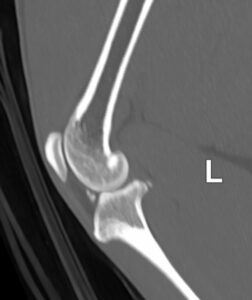
X-ray – Left Stifle
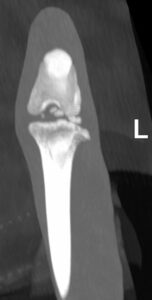
X-ray – Left Stifle
Diagnostics: Odysseus was admitted for CT and joint taps under general anaesthesia. He was sedated with the owner to reduce the stress associated with the procedure. On CT, he had bilateral intra-articular lesions possibly associated with a cranial cruciate ligament disease and historic fractures of his right metatarsals with callus formation. There were some mild osteoarthritic changes in some joints but his spine was normal. Joint taps showed changes that could indicate IMPA but this was not definitive.
Treatment
Establishing a treatment plan was difficult because we did not have a definitive diagnosis, and could not establish whether his pain was neuropathic or inflammatory in origin. Further diagnostics were discussed but the caregivers main concern was that he was painful, so we decided to start a trial treatment with Pregabalin twice daily to replace the twice daily Gabapentin. The caregivers found it difficult to give Gabapentin three times daily, which is probably more appropriate for Gabapentin. Pregabalin is amenable to twice daily dosing in cats. We continued the Solensia and Meloxicam.
Outcome: After two to three weeks of Pregabalin 2 mg/kg twice daily, Odysseus was once again becoming more outgoing, asking for cuddles, and had a more normal posture. He was also circling and chasing his tail less. The Pregabalin dose was increased to 4 mg/kg twice daily and he is doing even better on this dose with no side effects. His caregivers are very happy with his progress.
Our commitment at BVS
We aim to provide the best possible care to our chronic pain patients, working hard to get a diagnosis and provide appropriate treatment options. A holistic approach to chronic pain is important, as is monitoring response to treatment with validated outcome measures. These pillars of managing chronic pain are applied to all our patients.